
How to Choose the Right Commercial Vehicle for Your Business Needs
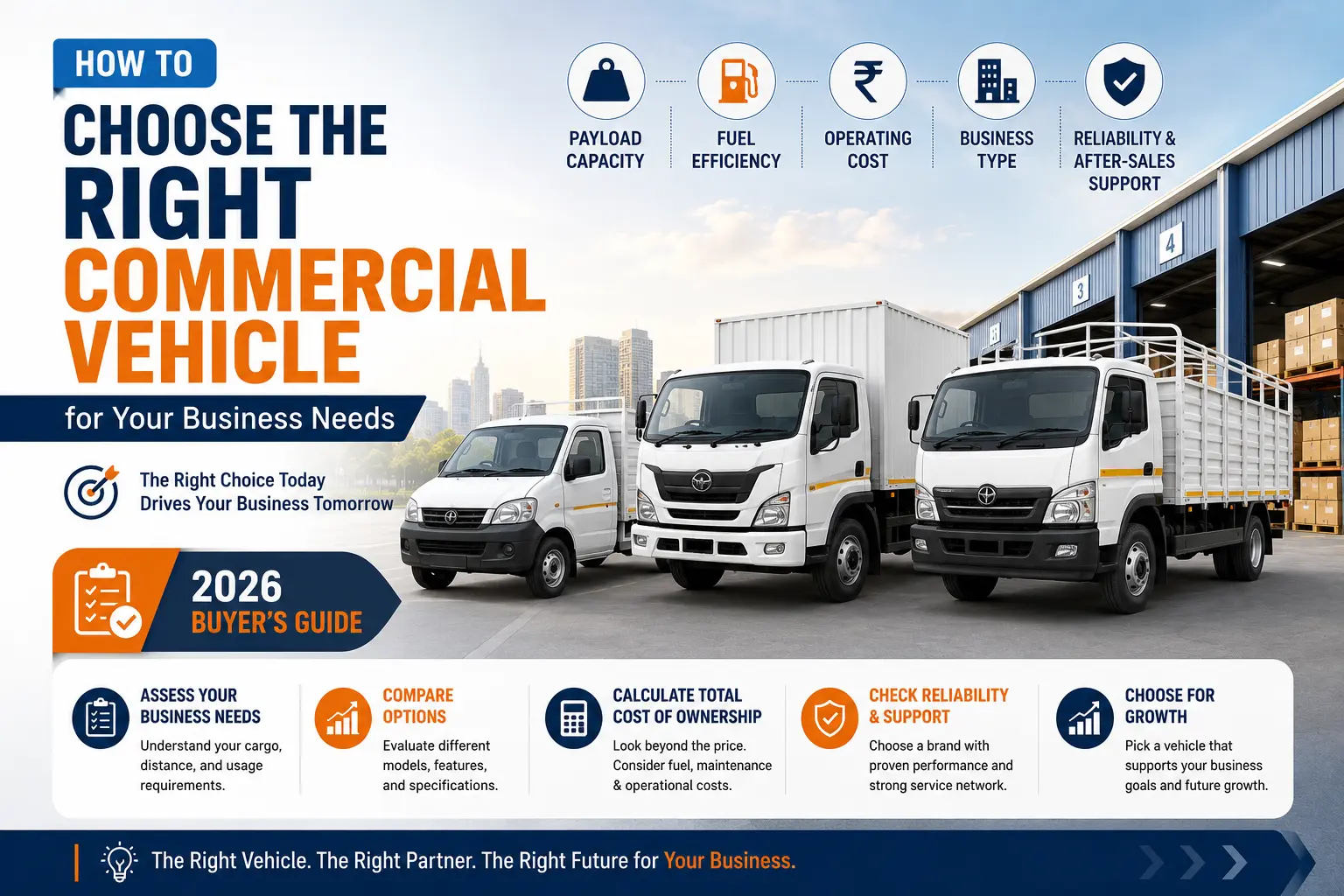
How to Choose the Right Commercial Vehicle for Your Business Needs
Buying or renting the wrong commercial vehicle costs you money in ways that aren't always obvious at first. You either end up paying for capacity you don't use, or you buy something too small and end up making extra trips every week. This guide walks you through the factors that actually matter so you pick a vehicle that fits your business, not just your budget.
Start With What You're Actually Moving
Before you look at any vehicle, list out what you transport most often. Ask yourself:
- What is the average weight of your load?
- What is the maximum weight you'll ever need to carry?
- Are your goods bulky (furniture, appliances) or dense (steel, cement)?
- Do you need to carry liquids, perishables, or fragile items?
A business that ships small parcels needs a very different vehicle than one that moves construction material or refrigerated food. Write this down first. Everything else in this guide builds on it.
Match the Vehicle Type to Your Load
Once you know what you're carrying, you can narrow down the vehicle category.
Mini trucks and pickups work well for small loads, city deliveries, and businesses that need to reach narrow lanes or crowded markets. They're also cheaper to run and easier to park.
Medium-duty trucks (like a Tempo 407 or similar) suit businesses that move moderate loads across a city or to nearby towns. This is a common choice for retail distribution, small manufacturing units, and local logistics companies.
Heavy-duty trucks are built for long-distance, high-volume transport. If your business moves large quantities of goods across states, this is where you'll end up, even though the upfront and running cost is higher.
Refrigerated vehicles matter if you handle food, pharmaceuticals, or anything temperature-sensitive. Don't skip this category just to save money — spoiled stock costs more than the vehicle.
Specialized vehicles (tankers, flatbeds, container carriers) apply if your goods don't fit a standard container, like liquids, long steel rods, or oversized equipment.
Think About Distance and Route
Where your vehicle travels changes what you need.
If most trips stay within the city, prioritize a vehicle that handles traffic well, fits into smaller streets, and gets decent mileage on short trips. A large truck struggles in dense city traffic and burns more fuel idling.
If you run regular outstation routes, look for a vehicle built for highway driving, with a bigger fuel tank, a comfortable driver cabin for long hours, and lower maintenance needs over long distances.
If your routes include hilly or rough terrain, check the vehicle's ground clearance and engine power. A vehicle that works fine on flat city roads may struggle on inclines with a full load.
Calculate the Total Cost, Not Just the Purchase Price
The upfront price of a commercial vehicle is only part of the cost. Before you decide, add up:
- Fuel cost: Diesel and CNG vehicles have very different running costs. Calculate based on your typical monthly distance.
- Maintenance and spare parts: Some brands have cheaper, more available spare parts in your area. Check this locally before buying.
- Insurance: Commercial vehicle insurance costs more than personal vehicle insurance, and it varies by vehicle size and use.
- Driver cost: Larger vehicles may need a licensed driver with specific certification, which affects your hiring cost.
- Resale value: Some vehicle brands and models hold their value better after a few years. This matters if you plan to upgrade later.
A cheaper vehicle with poor mileage and expensive spare parts can cost you more over three years than a slightly pricier one with better running costs.
Decide Between Buying, Leasing, or Renting
Buying makes sense if you need the vehicle daily, for years, and want to build an asset for your business. You get full control, but you also handle all maintenance and depreciation.
Leasing works if you want a new vehicle without a large upfront payment. Monthly costs are predictable, but you don't own the vehicle at the end unless your lease includes a buyout option.
Renting fits businesses with occasional or seasonal transport needs. If you only need extra vehicles during a busy season or for a one-time bulk order, renting avoids the cost of an idle vehicle the rest of the year.
If your transport need changes month to month, don't rush into buying. Rent for a few months first and track how often you actually use the vehicle before committing to a purchase.
Check Load Capacity Against Legal Limits
Every commercial vehicle has a rated load capacity, and overloading is both illegal and dangerous. Overloaded vehicles wear out faster, handle worse, and risk fines or seizure during checks.
Pick a vehicle with a capacity slightly above your typical maximum load, not your average load. This gives you room for occasional larger orders without pushing the vehicle past its limit every time.
Factor In Fuel Type
Diesel, CNG, and electric commercial vehicles all come with different trade-offs.
Diesel vehicles usually cost less upfront and handle long distances and heavy loads well, but running costs and emissions are higher.
CNG vehicles cost less to run per kilometer in cities with good CNG infrastructure, and work well for local, stop-start delivery routes.
Electric commercial vehicles suit short, predictable city routes where you can charge overnight. Upfront cost is higher, but running cost per kilometer is usually the lowest, and there's no engine maintenance in the traditional sense.
Check fuel availability in your operating area before you decide. A CNG vehicle isn't useful if filling stations are far from your routes.
Don't Ignore After-Sales Support
A good deal on the vehicle itself means little if the service network is weak in your city. Before buying, check:
- How far is the nearest authorized service center?
- Are spare parts easily available locally, or do they need to be ordered?
- What's the average wait time for repairs based on other owners' experience?
A vehicle sitting idle for a week waiting on a part costs you in missed deliveries and unhappy customers.
Test Before You Commit
Take a test drive with a load similar to what you'll actually carry, not an empty vehicle. This shows you how the vehicle handles, brakes, and performs with real weight, which is very different from an empty test drive.
If possible, talk to other business owners already using the same vehicle model for similar work. Their experience with real running costs and reliability tells you more than a brochure.
Final Checklist Before You Buy or Rent
- Match vehicle type and size to your actual load, not your ideal load
- Consider your usual routes: city, highway, or rough terrain
- Calculate total cost of ownership, not just the sticker price
- Compare buying, leasing, and renting based on how often you'll use it
- Choose a capacity slightly above your typical maximum load
- Pick a fuel type that matches your route and local infrastructure
- Confirm service and spare parts availability in your area
- Test drive with a real load before you finalize
Final Thoughts
The right commercial vehicle depends on your specific business, not on what's popular or what a dealer recommends first. Start with your load and routes, calculate the real cost over time, and choose the option, buy, lease, or rent, that matches how often you'll actually use the vehicle. Getting this decision right saves you money every month for as long as you own or use the vehicle.
